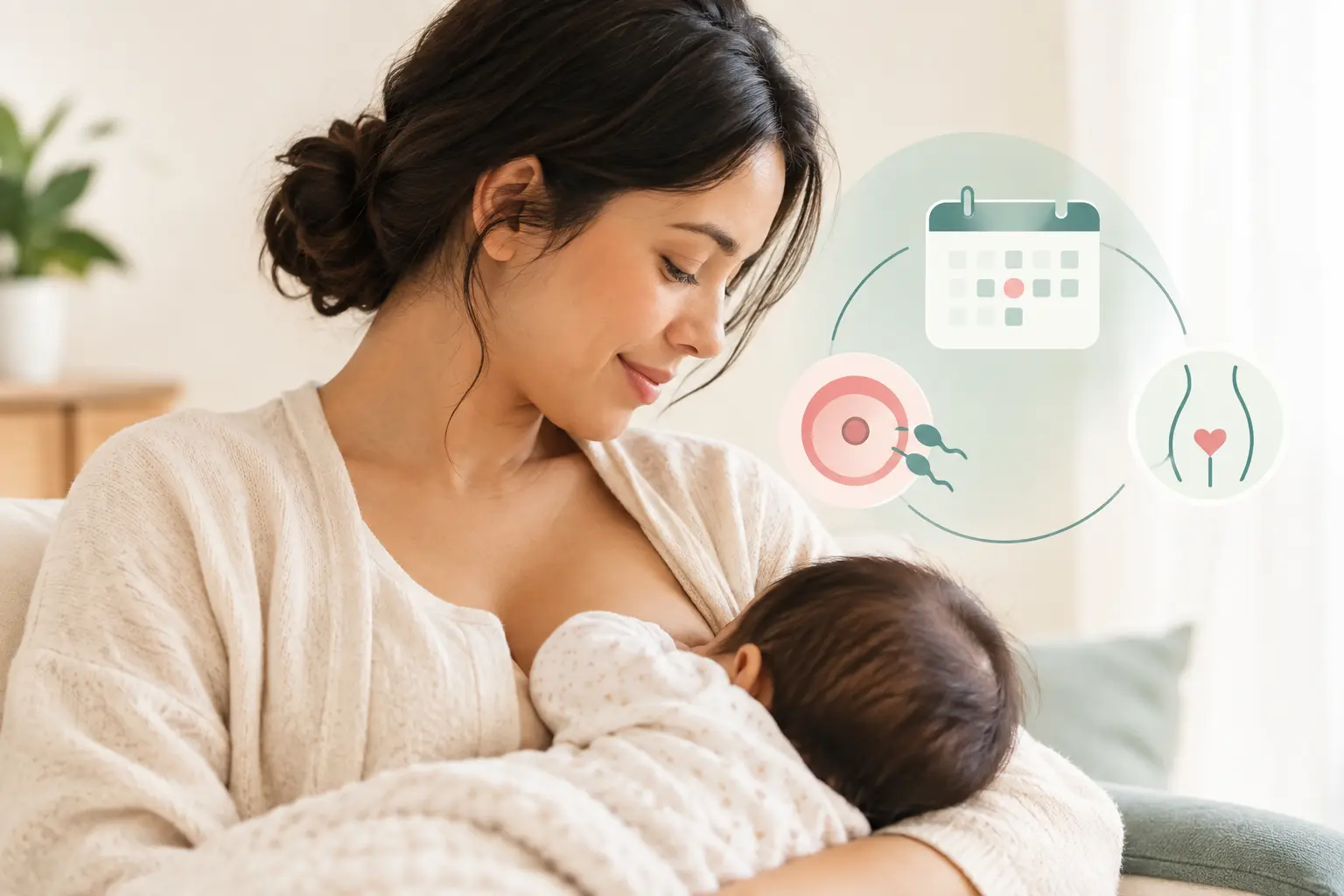
Can You Ovulate While Breastfeeding? What to Watch For
Yes, you can ovulate while breastfeeding, and it often happens before your period returns. Breastfeeding delays ovulation for most people, but it doesn't stop it completely, and the timing varies widely. On average, ovulation returns around 36 weeks postpartum for breastfeeding parents, but the real range runs anywhere from 15 to 66 weeks. Here's what actually drives that timeline and how to tell when it's happening.
Why Breastfeeding Delays Ovulation
Breastfeeding raises your prolactin levels, the hormone responsible for milk production. High, sustained prolactin suppresses the hormonal signals your body needs to trigger ovulation. This is where the idea of breastfeeding as natural birth control comes from, and it does have a real basis: it's called the Lactational Amenorrhea Method (LAM).
LAM can be genuinely effective, but only under specific conditions: you're exclusively breastfeeding (no formula, no regular solids), feeding frequently (roughly every 4 hours during the day and every 6 hours overnight), your baby is under 6 months old, and your period hasn't returned yet. When all four are true, LAM is about as effective as many hormonal birth control methods, with roughly 2 pregnancies per 100 people in the first 6 months.
The moment any of those conditions change (baby starts solids, feeds become less frequent, you introduce formula, your baby passes 6 months), LAM's reliability drops fast.
How Soon Does Ovulation Return?
The honest answer is it depends heavily on how you're feeding:
If you're not breastfeeding at all, ovulation typically returns within 4 to 6 weeks after birth.
If you're exclusively breastfeeding, ovulation is delayed much longer, commonly 3 to 6 months, though research puts the true average around 36 weeks postpartum, with individual cases ranging from 15 to 66 weeks. That's a wide window, and where you land in it depends on feeding frequency, whether you're supplementing, and your own hormonal response.
If you're combination feeding (breastfeeding plus formula or solids), ovulation tends to return sooner than exclusive breastfeeding, since prolactin suppression weakens as feeding frequency drops.
Can You Get Pregnant Before Your Period Comes Back?
Yes, and this is the part that catches people off guard. Ovulation always happens before menstruation in the cycle. That means the first ovulation after birth comes before the first period, not after it. If you've been treating "no period yet" as a sign you're safe, that's not accurate. You can conceive during that first ovulation, weeks before you'd have any period to confirm it happened.
If you're not trying to conceive again yet, don't rely on the absence of a period as contraception once you're past the strict LAM criteria above. Talk to your provider about a backup method, especially one compatible with breastfeeding if that matters to you (progestin-only options and non-hormonal methods like the copper IUD are commonly recommended as breastfeeding-safe, but confirm what's right for you with a provider).
Signs of Ovulation While Breastfeeding
Since you don't have a period to work backward from yet, you're looking for the same direct signs used in any cycle, though breastfeeding adds a few wrinkles:
Cervical mucus changes. In the days before ovulation, mucus typically becomes clearer, wetter, and stretchier. This sign still works while breastfeeding and doesn't depend on your cycle having "started" yet.
Basal body temperature (BBT). A sustained rise after ovulation is a reliable confirmation sign, but broken sleep from night feeds can make BBT tracking noisier and harder to read accurately in the early postpartum months. If your temperature readings look erratic, that's likely the sleep disruption, not a sign something's wrong.
Ovulation predictor kits (OPKs). These detect the LH surge before ovulation. They generally still work while breastfeeding, though postpartum hormone levels can occasionally produce less clear results in the first several weeks, so don't rule out ovulation just because one test looks ambiguous.
Mild one-sided pelvic twinges (ovulation pain) or a small increase in libido. These are less reliable on their own, but worth noting alongside the signs above.
Does Pumping Affect This Differently Than Direct Breastfeeding?
Somewhat. What matters most for suppressing ovulation isn't breastfeeding versus pumping specifically, it's total prolactin stimulation, which depends on frequency and how completely the breast is emptied. Frequent, effective pumping can suppress ovulation similarly to frequent direct nursing. But pumping schedules are often less frequent or less consistent than a baby feeding on demand, which is part of why exclusively pumping parents sometimes see ovulation and periods return sooner than exclusively nursing parents. There's no universal rule here; it comes down to your actual feeding or pumping frequency, not the method itself.
Why an Ovulation Calculator Isn't Useful Yet, and What to Do Instead
This is worth being direct about: PanaKit's ovulation calculator, like most, works by taking your average cycle length and applying a standard 14-day luteal phase estimate. That approach requires an existing cycle to calculate from, so it's not useful yet if your period hasn't returned since giving birth. There's no average cycle length to enter.
The practical alternative for this stage: track the direct signs above (cervical mucus, BBT allowing for sleep disruption, and OPKs) rather than trying to use calendar math with no cycle data. Once your period returns and you've tracked one or two real cycles, the ovulation calculator becomes genuinely useful again, working from your real cycle length instead of guessing.
If you're also tracking your nutrition needs while breastfeeding, the breastfeeding calorie calculator can help you figure out your daily needs in the meantime, since that's something you can calculate accurately right now, unlike ovulation timing.
When to Talk to a Doctor
Most postpartum ovulation timelines resolve within normal variation, but check in with a provider if:
You're more than 6 months postpartum with no period and no signs of ovulation, especially if you've reduced breastfeeding frequency You're trying to conceive again and it's been several months of tracking signs with no clear indication of ovulation You have a condition like PCOS or a thyroid issue that could be affecting your cycle's return independent of breastfeeding
Frequently Asked Questions
Can you ovulate while exclusively breastfeeding? Yes, though it's delayed for most people. Exclusive breastfeeding can suppress ovulation effectively under strict conditions (frequent feeding, baby under 6 months, no period yet), but it's not guaranteed, and ovulation can still return even with exclusive breastfeeding.
Is breastfeeding a reliable form of birth control? Only under the specific LAM criteria: exclusive breastfeeding, frequent feeds day and night, baby under 6 months, and no period yet. When all four apply, it's genuinely effective. Outside those conditions, it's not reliable.
How do I know I'm ovulating if I don't have a period yet? Track cervical mucus changes, basal body temperature, or use an ovulation predictor kit. These signs can confirm ovulation is happening even with no period to work from.
Does pumping delay ovulation the same way breastfeeding does? It can, but it depends more on how frequently and completely you're pumping than on pumping versus direct nursing. Less frequent pumping schedules often mean ovulation returns sooner than with exclusive on-demand nursing.
Medical disclaimer. This article is for general educational purposes and is not a substitute for medical advice. Consult a healthcare provider for guidance specific to your situation.