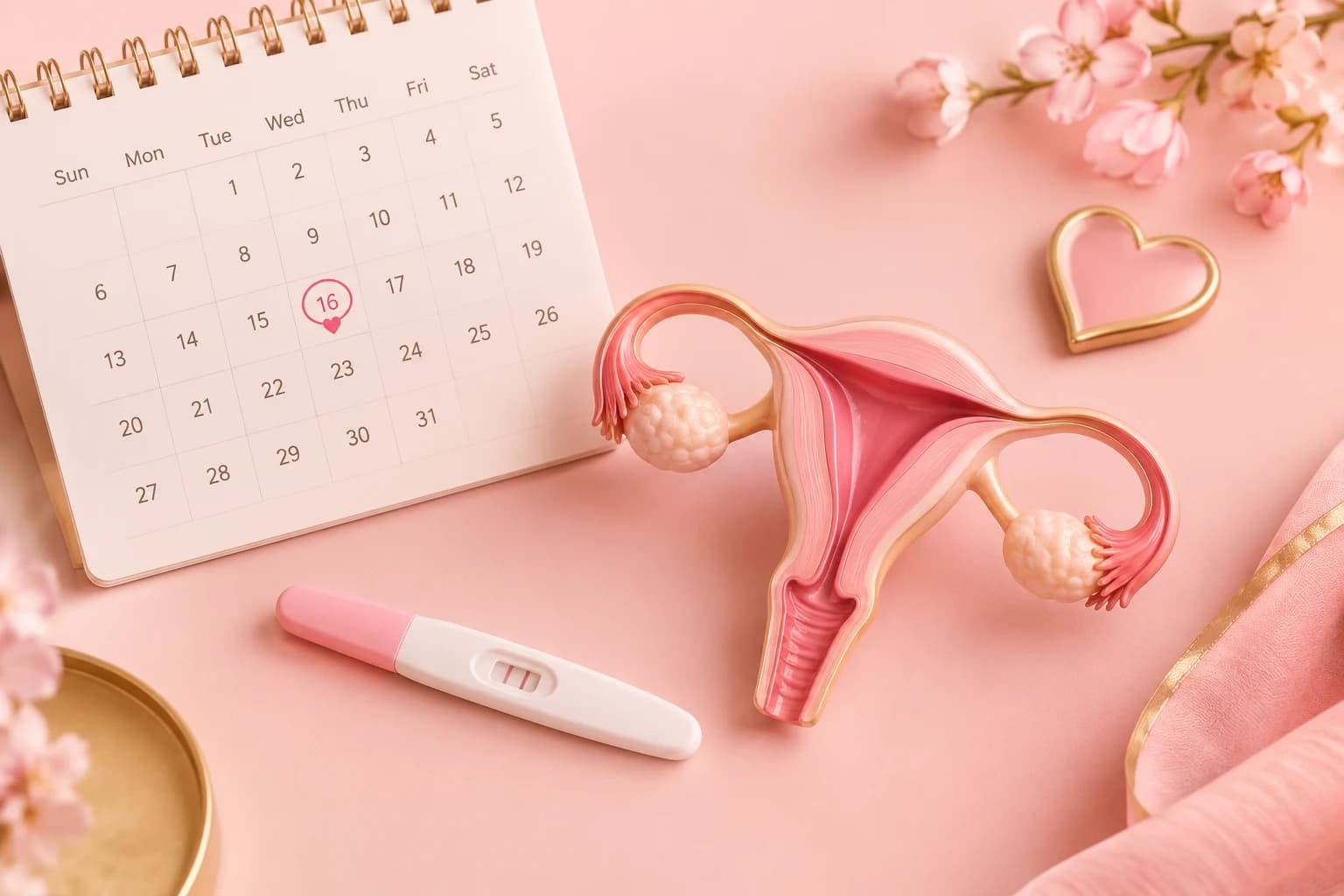
Your ovulation day is your cycle length minus 14 days, counting from the first day of your period as day 1. On a 28 day cycle, that's day 14. On a 26 day cycle, it's day 12. On a 31 day cycle, it's day 17. Below is the full breakdown for every common cycle length, along with why this estimate can be off by a day or two even when calculated correctly.
How to Find Your Ovulation Day by Cycle Length
The math is the same regardless of your specific cycle length: subtract 14 from your average cycle length, and count that many days from the first day of your last period. This works because the second half of your cycle, the luteal phase, stays fairly consistent at around 14 days for most people, while the first half (the follicular phase) is what actually varies from person to person and cycle to cycle. So a longer or shorter cycle shifts your ovulation day earlier or later, but the 14 day countdown to your next period stays roughly the same either way.
Ovulation Day by Cycle Length (21 to 35 Days)
| Cycle length | Estimated ovulation day (from day 1 of period) |
|---|---|
| 21 days | Day 7 |
| 22 days | Day 8 |
| 23 days | Day 9 |
| 24 days | Day 10 |
| 25 days | Day 11 |
| 26 days | Day 12 |
| 27 days | Day 13 |
| 28 days | Day 14 |
| 29 days | Day 15 |
| 30 days | Day 16 |
| 31 days | Day 17 |
| 32 days | Day 18 |
| 33 days | Day 19 |
| 34 days | Day 20 |
| 35 days | Day 21 |
For an exact date based on your own last period, rather than just the day number, use the ovulation calculator with your specific cycle length. Once you have your estimated day, how often you actually need to have sex during that window matters more than covering every single day.
Why This Is Just an Estimate
This calculation assumes a luteal phase of exactly 14 days, but research shows the luteal phase actually ranges from about 12 to 16 days for most people, even though 14 is the average. That means the table above carries a realistic margin of error of about plus or minus 2 days, even for someone with a genuinely consistent cycle length. This isn't a flaw in the math, it's just the honest limit of what calendar-based estimates can tell you, since your actual ovulation day depends on real-time hormone signals a calendar can't see. If you've recently stopped hormonal birth control or you're breastfeeding, this gets even less reliable, since your cycle length itself may not be established yet. See ovulation after stopping birth controlor can you ovulate while breastfeeding if either applies to you.
If you want to narrow that margin, tracking cervical mucus changes, basal body temperature, or using an ovulation predictor kit alongside the calendar estimate gets you much closer to your actual day than the table alone.
What If Your Cycle Is Shorter Than 21 or Longer Than 35 Days?
Cycles outside the 21 to 35 day range are generally considered irregular, and calendar-based prediction becomes significantly less reliable at that point. If your cycles run consistently shorter or longer than this range, or vary widely month to month, direct tracking methods (OPKs, basal body temperature, cervical mucus) will serve you better than any calendar formula, since they measure what's actually happening in that specific cycle rather than estimating from an average.
Frequently Asked Questions
I have a 26 day cycle, when do I ovulate?
Around day 12, counting from the first day of your period. Using the standard 14 day luteal phase estimate, a 26 day cycle puts ovulation at day 12 (26 minus 14).
I have a 30 day cycle, when do I ovulate?
Around day 16, counting from the first day of your period. A 30 day cycle puts ovulation at day 16 (30 minus 14).
I have a 31 day cycle, when do I ovulate?
Around day 17, counting from the first day of your period. A 31 day cycle puts ovulation at day 17 (31 minus 14).
Does this table work for irregular cycles?
Not reliably. This table assumes a fairly consistent cycle length. If your cycles vary significantly month to month, use your shortest recent cycle length for a more cautious estimate, or rely on direct tracking methods instead of calendar math alone.
Luteal phase length per a study in the British Journal of Obstetrics and Gynaecology, cited on PubMed (mean 14.1 days, with most normal cycles falling in the 12-16 day range).
Medical disclaimer. This article is for general educational purposes and is not a substitute for medical advice. Consult a healthcare provider for guidance specific to your situation.